
The essential context.
- A follistatin signal in mouse cells is not demonstrated human muscle growth.
- The SARMs and related compounds category is a catalogue group, not a shared pharmacological class.
- Source products and clinical or laboratory study material must not be assumed equivalent.
What YK-11 is
YK-11 is a steroidal androgen receptor research compound, often grouped with SARMs in sales catalogues. It should not be described as a nonsteroidal molecule. Its reputation as a myostatin blocker comes largely from discussion of follistatin-related cell experiments; that label compresses several unproven steps into a claim about whole-body effects.

YK-11: target, model and open question
Conceptual overview without a dose, measurement curve or chemical structure.
Androgen receptor / follistatin signalling
Steroidal androgen receptor research modulator
Studied model
Cell-culture experiments
Interpretation limit
A follistatin signal in mouse cells is not demonstrated human muscle growth.
What the named research shows
Kanno and colleagues, Biological and Pharmaceutical Bulletin (2013; DOI 10.1248/bpb.b13-00231), studied mouse C2C12 muscle precursor cells. YK11 affected differentiation and follistatin expression. These laboratory observations do not establish muscle growth or safety in people.
A follistatin signal in mouse cells is not demonstrated human muscle growth.
Why it is discussed in sport
The sporting narrative usually jumps from a molecular pathway to an unusually large muscle-growth promise. A cultured precursor cell does not reproduce circulation, metabolism, training stress or the interactions among organs. Even a real change in a signalling protein may fail to produce a useful functional result in a person. In this evidence set, that translation remains an open question rather than a demonstrated benefit.
Risks and unresolved questions
The cell paper cannot quantify human liver, hormonal, cardiovascular or reproductive harms. That limitation should not be presented as evidence that YK-11 avoids those problems. FDA warnings for products marketed as SARMs include liver injury. The limited human safety information makes confident statements about tolerability, interactions or reversibility particularly inappropriate.
Reading product claims alongside evidence
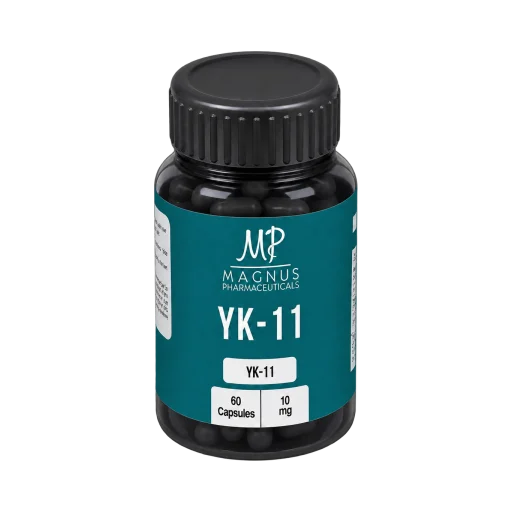
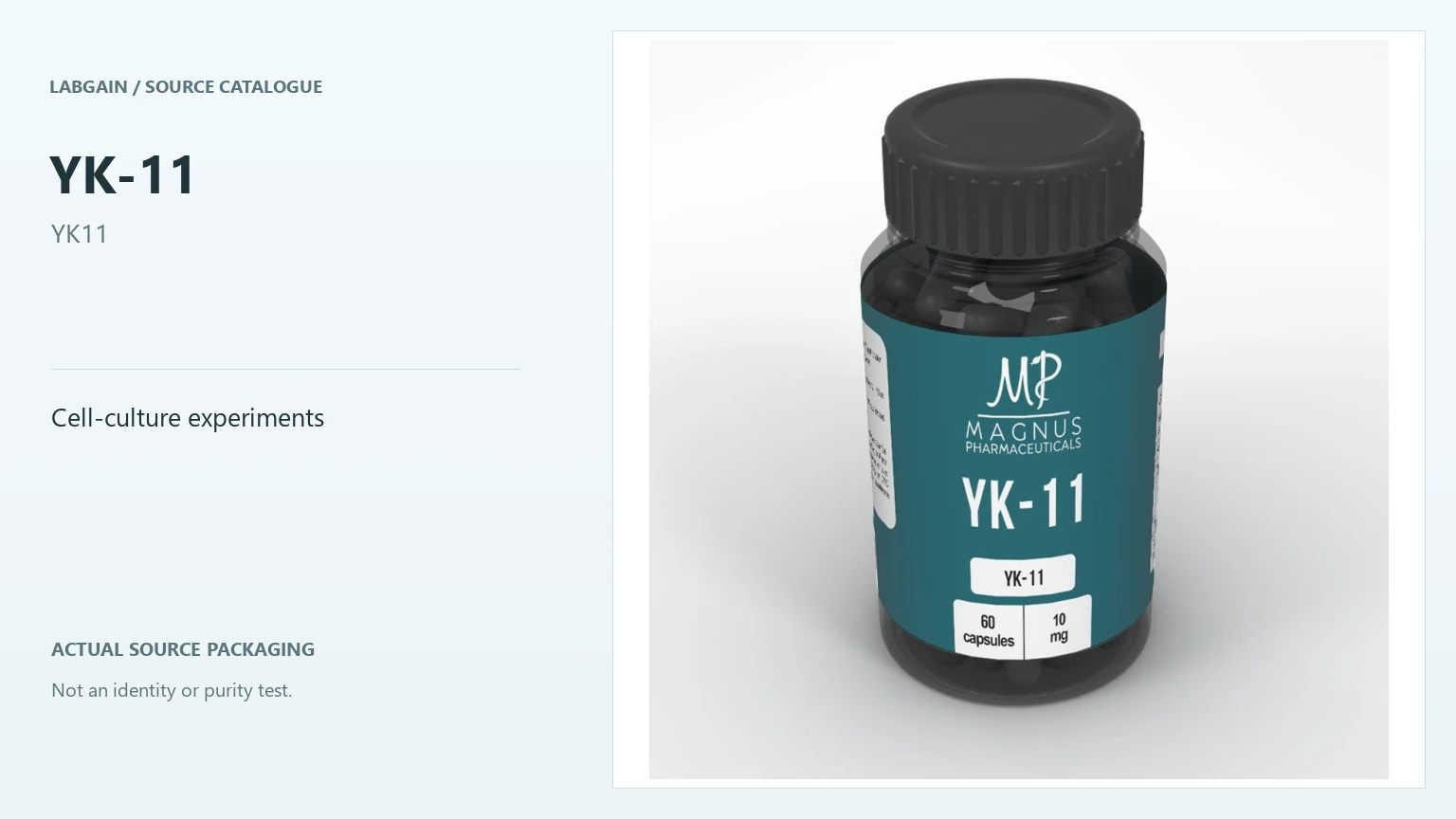
A research publication and a retail product answer different questions. The image shows the actual source packaging for recognition. It does not confirm contents, purity, sterility or suitability. A particular batch would require traceable sampling, identity testing and appropriate analytical documentation. A percentage printed on a label alone does not replace that documentation.
This overview separates observed results from extrapolation to athletes. It provides no use protocol. Potential benefits are described as studied signals or as claims in sporting discussions; missing long-term data are not treated as reassurance. New publications can change the assessment. The draft still requires editorial review before publication.
Frequently asked questions
Is YK-11 actually a SARM?
Steroidal androgen receptor research modulator. Classification follows pharmacology rather than the name of a supplier category.
Do the cited studies establish a safe sports benefit?
A follistatin signal in mouse cells is not demonstrated human muscle growth. Study populations, endpoints and observation periods limit the conclusion. A photograph or trade name does not resolve those gaps.
Sources & further reading
Follow the original publications and records behind this overview. Each source answers a specific question; no single record establishes every aspect of a compound or product.
- 01 Kanno et al., YK11 and follistatin in C2C12 cells, BPB 2013; DOI 10.1248/bpb.b13-00231
- 02 FDA: SARMs consumer safety communication
Dr. Monica Tatem
Dr. Monica Tatem earned her Ph.D. in Molecular Pharmacology from a leading medical university, followed by postdoctoral research focused on anabolic pathways and cellular signaling. Her scientific work encompasses a comprehensive...
View author profile