
The essential context.
- A fragment does not automatically retain the parent's effects.
- A modification can be central to the studied material.
- Similar names should not replace sequence-level identification.

A name can hide several different objects
A peptide can be described by a development code, an amino-acid sequence, a fragment range, a modified construction or a commercial label. These names are not equally precise. A short catalogue title may help people find a topic while still leaving important identity questions unresolved. The scientific comparison begins only when those questions are made explicit.
Ask whether a name identifies the whole parent peptide, a shorter section or a deliberately altered analogue. Then check whether the study used that exact material. Shared words in the title are a useful search lead, but they cannot establish that two substances are chemically or biologically interchangeable.
A route through the evidence
A conceptual reading map for this topic.
Name
Catalogue label or scientific identity
Construction
Sequence, fragment and modification
Study match
The material must correspond
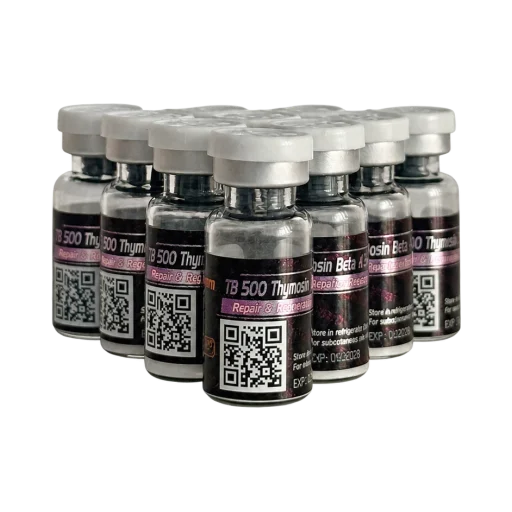
TB-500 illustrates the fragment problem
The 2012 analytical work by Esposito and colleagues characterised an acetylated fragment associated with TB-500. It is a concrete example of why the shorter label should not automatically be expanded into full-length thymosin beta-4. The paper's identity finding does not establish the contents of every later product using the same name.
A comparison should preserve the distinction between what a supplier calls an item and what a test identifies in a particular sample. If the sequence is not documented, the uncertainty belongs on the page. It should not disappear because a longer, better-studied name sounds more familiar.
A modification is not a decorative suffix
Jetté and colleagues' 2005 CJC-1295 research involved an albumin-binding construction. The modification was part of the experimental identity. An unspecified CJC-1295 listing cannot inherit the properties of that construction simply because DAC-related names are sometimes shortened in conversation.
The same reading discipline is relevant to AOD9604 and HGH fragment 176–191. Heffernan and colleagues studied defined AOD9604 material in mouse experiments in 2001. A related fragment label is not enough to transfer those results. First establish what the source means by the name; only then decide whether the cited experiment concerns the same material.
Amount, identity and presentation are separate fields
A label can state a mass without resolving the molecular identity. A product form can describe a powder or solution without proving composition. A pack count can be clear even when the component proportions of a mixture are not. These are separate facts, and a useful catalogue keeps them separate rather than allowing one apparently precise number to stand in for all the others.
For a mixed product such as REHAB MIX, a total milligram amount should not be split into component amounts by guesswork. Similarly, a brand name does not prove a manufacturer, and a photograph cannot replace a batch-linked identity assessment.
Connect the paper, specification and sample
ICH Q6A provides a framework for specifications that brings tests, procedures and acceptance criteria together. For reading a catalogue, the practical lesson is to ask what was tested against which defined identity. A certificate should be tied to the actual sample and batch rather than functioning as an attractive generic image.
When following internal links, use the molecule overview for naming and research context, the product page for the selected presentation and the document area for available analytical evidence. This is a more reliable route than choosing whichever similar name has the most favourable study attached. Unresolved identity should remain an explicit unresolved question.
Sources & further reading
Follow the original publications and records behind this overview. Each source answers a specific question; no single record establishes every aspect of a compound or product.
- 01 Esposito et al., analytical characterisation of a TB-500 fragment, Drug Test Anal, 2012; DOI 10.1002/dta.1402
- 02 Jetté et al., albumin-binding CJC-1295 construction, Endocrinology, 2005; DOI 10.1210/en.2004-1286
- 03 Heffernan et al., AOD9604 mouse metabolism experiments, Endocrinology, 2001; DOI 10.1210/endo.142.12.8522
- 04 ICH Q6A, Specifications, test procedures and acceptance criteria, EMA
Dr. Monica Tatem
Dr. Monica Tatem earned her Ph.D. in Molecular Pharmacology from a leading medical university, followed by postdoctoral research focused on anabolic pathways and cellular signaling. Her scientific work encompasses a comprehensive...
View author profile