
The essential context.
- GHRH analogues and ghrelin-receptor agonists are different groups.
- A GH or IGF-I measurement is an endocrine endpoint.
- The exact molecular construction matters when matching a study.
Two routes into an endocrine system
A shared downstream hormone can make distinct compounds look like versions of the same idea. Sermorelin and CJC-1295 are discussed through growth-hormone-releasing hormone biology. Ipamorelin, GHRP-2, GHRP-6, Hexarelin and Ibutamoren belong in a different receptor discussion associated with GH secretagogues. The name of the downstream hormone does not erase that distinction.
Start by identifying the route being studied, then look at the actual material and endpoint. A comparison headed GH support is too broad to reveal those details. The question is not simply whether a hormone measurement changed, but which experiment produced that result and what else was assessed.
A route through the evidence
A conceptual reading map for this topic.
Compound identity
GHRH analogue or secretagogue
Receptor pathway
Keep the routes distinct
Endocrine endpoint
Not a sporting outcome
GHRH analogues need their full identity
Teichman and colleagues studied a long-acting CJC-1295 construction in healthy adults in 2006. The construction belongs in the name of the evidence, not in a footnote that can be dropped when another CJC label is discussed. An unspecified CJC-1295 listing should not inherit those findings by abbreviation alone.
Sermorelin is associated with GHRH-(1–29) research. Corpas and colleagues examined endocrine responses in older men in 1992. That is a different material and study context. The fact that both topics concern GHRH biology does not establish matching duration, equivalent exposure or the same clinical consequences.
Secretagogue research also has distinct layers
Raun and colleagues' 1998 ipamorelin work included preclinical pharmacological comparisons with other GH-releasing peptides. It provides a useful example of how selectivity was investigated within an experimental system. It does not turn every subsequent product description into a demonstrated human performance claim.
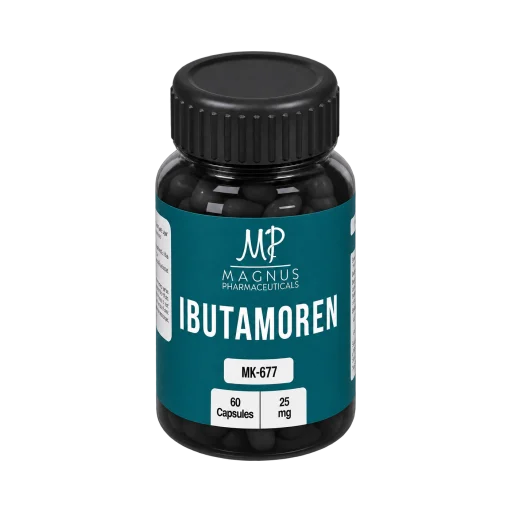
Ibutamoren adds another distinction: MK-677 is a small molecule rather than a peptide. Placing it beside Ipamorelin for navigation can be useful, provided the page preserves this difference. Results cannot be transferred merely because two compounds are described with the same downstream hormone or appear in the same list of research interests.
Separate hormone signals from practical outcomes
A GH pulse, an integrated hormone measurement and an IGF-I result are endocrine observations. They are not themselves tests of injury recovery, training adaptation, sleep quality or competitive performance. Each proposed outcome needs a suitable definition and a study designed to measure it. The body-composition and clinical-outcome questions in the MK-677 trial by Nass and colleagues illustrate why these layers should remain visible.
A reader can ask which outcomes were primary, how long they were followed and whether the population was healthy, hormone-deficient, older or recovering from surgery. Those descriptions are part of the result and should stay attached when research is summarised.
What a useful catalogue comparison can show
A careful comparison can show verified naming, actual compound class, presentation and the evidence level for each molecule. It can also say when identity remains uncertain, including DAC-related naming or an unspecified preparation. It should not imply that combining compounds solves the gaps in their evidence. A combination introduces an additional question rather than answering the original ones.
Read the product's selected content option as a label statement, then follow the relevant research article for context. Batch documentation concerns the actual material; endocrine studies concern a defined research preparation. Keeping both records accessible is more informative than reducing the category to a promise of natural hormone optimisation.
Sources & further reading
Follow the original publications and records behind this overview. Each source answers a specific question; no single record establishes every aspect of a compound or product.
- 01 Teichman et al., CJC-1295 studies in healthy adults, JCEM, 2006; DOI 10.1210/jc.2005-1536
- 02 Raun et al., ipamorelin preclinical pharmacology, Eur J Endocrinol, 1998; DOI 10.1530/eje.0.1390552
- 03 Corpas et al., GHRH-(1–29) endocrine study, JCEM, 1992; DOI 10.1210/jcem.75.2.1379256
- 04 Nass et al., MK-677 body-composition trial, Ann Intern Med, 2008; DOI 10.7326/0003-4819-149-9-200811040-00003
Dr. Monica Tatem
Dr. Monica Tatem earned her Ph.D. in Molecular Pharmacology from a leading medical university, followed by postdoctoral research focused on anabolic pathways and cellular signaling. Her scientific work encompasses a comprehensive...
View author profile