
The essential context.
- Identify the tissue, model and outcome behind 'recovery'.
- Fragment research and full-length peptides are not interchangeable.
- Small or uncontrolled studies cannot establish broad safety or effectiveness.
Define recovery before assessing a claim
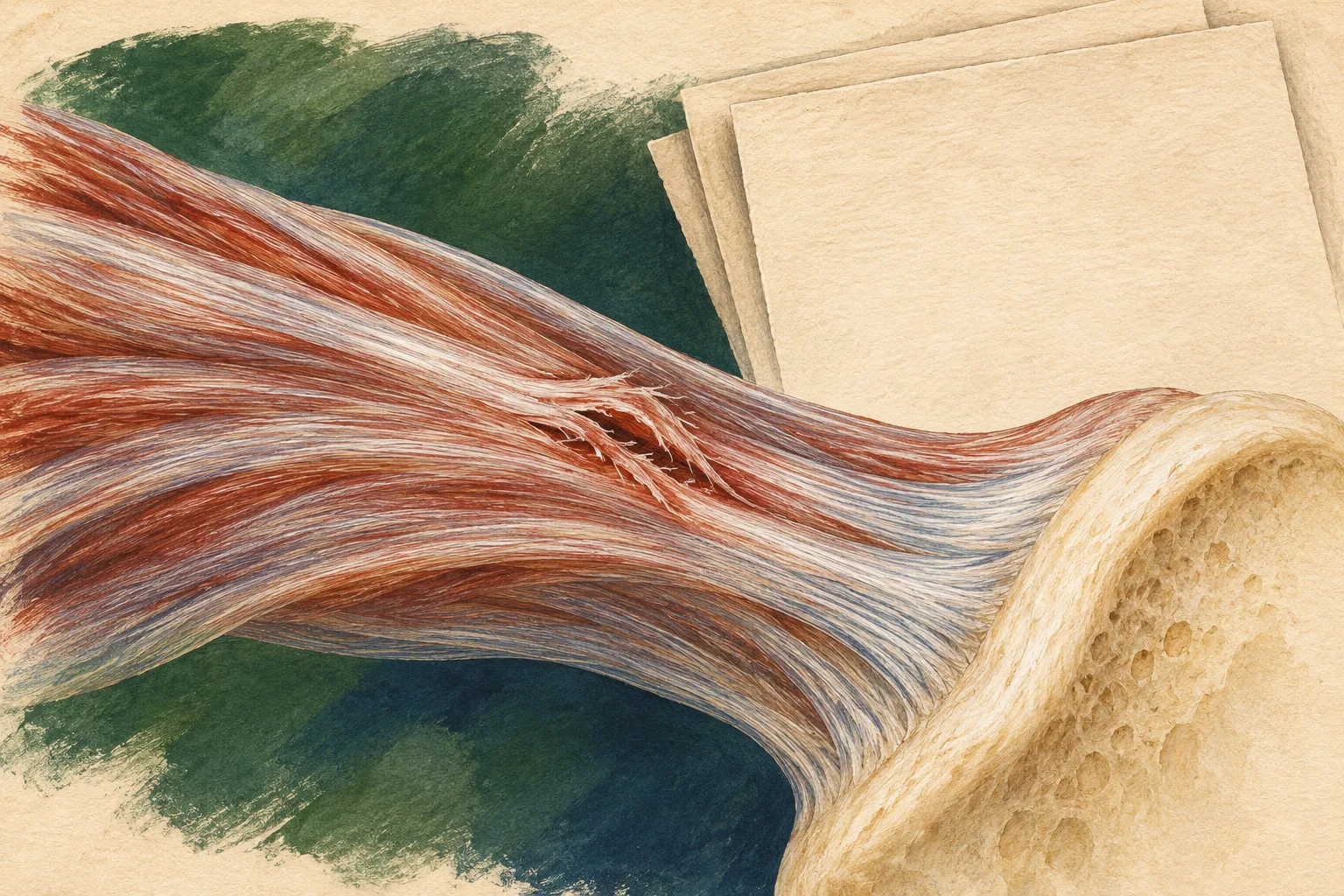
Recovery can mean reduced discomfort, structural repair, improved function, tolerance of training or a return to sport. Those outcomes are related but not interchangeable. A useful description states which one was measured, by what method and over what period. A general word such as healing should not be allowed to join several unanswered questions together.
Start with the tissue and the model. A cell culture, an experimentally injured animal and a person with an established injury do not provide the same type of information. The research can be valuable at each stage, provided the summary retains that stage rather than jumping directly to a performance promise.
A route through the evidence
A conceptual reading map for this topic.
Model
Cell, animal or human
Material
Exact identity and formulation
Recovery endpoint
Function must be assessed
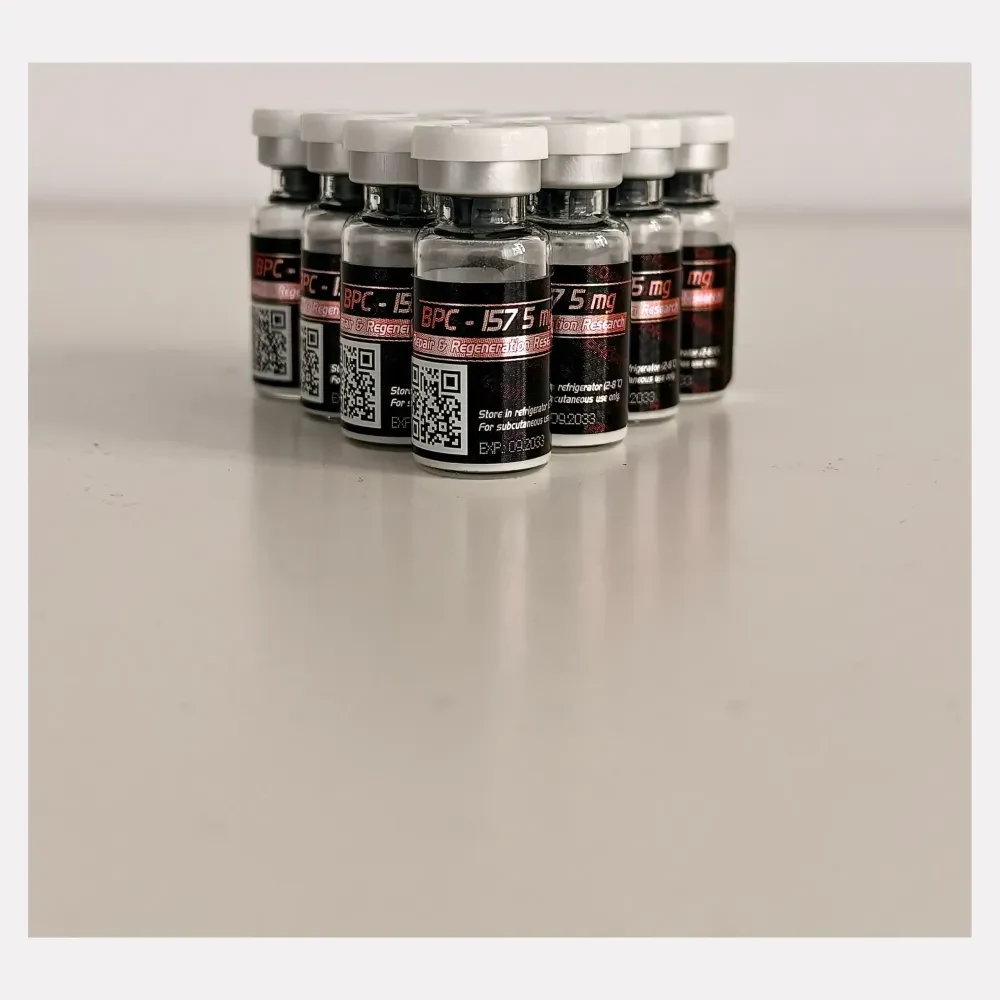
A small BPC-157 pilot answers a narrow question
Lee and Burgess published a BPC157 pilot in 2025 involving two participants. Such a report can document limited observations under its own conditions; it cannot provide a reliable general estimate of safety, establish uncommon adverse-event rates or demonstrate return-to-sport effectiveness. Its endpoint should be described as narrowly as its design permits.
This does not mean that a small study is meaningless. It means that it should not be asked to support a claim it did not test. When BPC-157 is discussed alongside TB-500, the existence of one human report also cannot be transferred from one material to the other.
TB-500 requires an identity check first
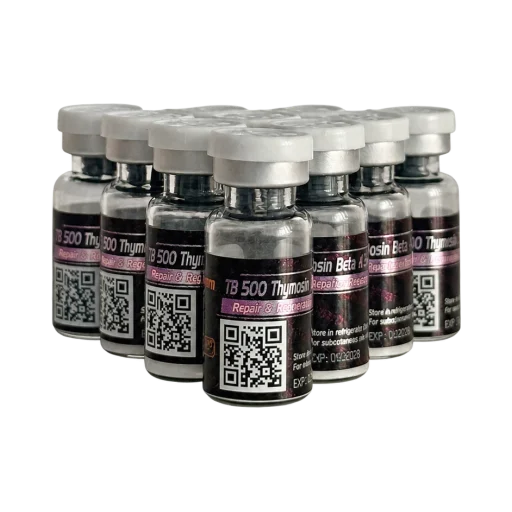
Esposito and colleagues identified an acetylated thymosin-beta-4 fragment in material called TB-500 in their 2012 analytical work. That finding is an identity example, not a clinical demonstration of injury repair. Research involving full-length thymosin beta-4 should not be relabelled as evidence for every item sold under the shorter commercial name.
The same discipline applies to a REHAB MIX listing. A mixture name does not establish exact component amounts, molecular forms or a clinical interaction. Evidence for ingredients studied separately does not become evidence for the mixture. The formulation itself needs to be defined before an appropriate comparison can begin.
A cellular signal has a specific boundary
Maquart and colleagues' 1988 GHK-Cu experiment concerned collagen synthesis in fibroblast cultures. It is a concrete laboratory example relevant to repair biology. It does not measure rehabilitation, tendon loading or athletic recovery in people. Changing the final noun in a summary from collagen synthesis to injury healing would change the claim rather than simplify the science.
A reader can follow the evidence chain by asking which intermediate steps have actually been tested. Has the finding been reproduced in a relevant system? Is the material the same? Were function and adverse effects assessed? These questions identify the missing link more clearly than a list of attractive molecular effects.
Quality evidence and recovery evidence are separate
The FDA's July 2026 advisory-committee briefing discusses several peptide-related bulk substances and their evidence questions. An advisory discussion is not an approval of a catalogue product. It is useful as a dated source for understanding which identity and clinical questions were being examined.
On this site, related research can explain the biology while a product page records labelled content and documentation. A batch report may support a particular analytical statement; it does not establish recovery effectiveness. Keeping the two types of evidence separate makes the page more useful and avoids suggesting that laboratory paperwork supplies the clinical outcomes that remain unmeasured.
Sources & further reading
Follow the original publications and records behind this overview. Each source answers a specific question; no single record establishes every aspect of a compound or product.
- 01 Lee and Burgess, BPC157 intravenous pilot, 2025; PMID 40131143
- 02 Esposito et al., analytical characterisation of a TB-500 fragment, Drug Test Anal, 2012; DOI 10.1002/dta.1402
- 03 Maquart et al., GHK-Cu fibroblast collagen experiment, FEBS Lett, 1988; DOI 10.1016/0014-5793(88)80509-X
- 04 FDA, July 2026 PCAC briefing on BPC-157, TB-500 and related bulk substances
Dr. Monica Tatem
Dr. Monica Tatem earned her Ph.D. in Molecular Pharmacology from a leading medical university, followed by postdoctoral research focused on anabolic pathways and cellular signaling. Her scientific work encompasses a comprehensive...
View author profile