
The essential context.
- Tirzepatide is one molecule with activity at two incretin receptors.
- Trials in diabetes, obesity and treatment withdrawal answer different clinical questions.
- The authorisation of Mounjaro applies to the named medicinal product, not every item labelled tirzepatide.

What dual-receptor activity means
Tirzepatide was developed under the code LY3298176. The original discovery work characterised a single peptide with activity at the GIP and GLP-1 receptors, combining laboratory experiments with early clinical investigation. It is therefore more precise to describe a dual-receptor agonist than to describe a mixture of two hormones.
The receptor signals are not identical copies of one another. Dedicated pharmacology studies have investigated differences in signalling and receptor handling, including biased activity at the GLP-1 receptor. These experiments help explain the research approach, but they should not be read as a complete prediction of effects in a person.

From a dual target to a clinical question
The molecular target map is the first layer. Patient outcomes require their own controlled clinical evaluation.
Tirzepatide
One engineered peptide
Two receptor targets
GIP receptor · GLP-1 receptor
Clinical research
Glycaemic and weight endpoints
Product assessment
Evidence refers to specified studied medicines
SURPASS: a diabetes research question
SURPASS-2 studied people with type 2 diabetes over 40 weeks and compared tirzepatide with semaglutide. The main analysis concerned change in glycated haemoglobin, or HbA1c, rather than body weight alone. The trial reported greater HbA1c reductions with tirzepatide in the studied groups, while gastrointestinal adverse events were common in both treatment arms.
This is a specific comparator trial with a defined population, background treatment and follow-up period. It cannot settle every possible comparison between treatments, formulations or patient groups. The study is most informative when its own question remains visible: how the study treatments compared on the prespecified outcomes under that protocol.
SURMOUNT: weight outcomes in a different population
SURMOUNT-1 enrolled 2,539 adults with obesity or overweight and a weight-related complication, excluding diabetes, and followed them for 72 weeks. It reported greater average weight reduction with tirzepatide than placebo. Gastrointestinal adverse events were the most frequently reported events and contributed to treatment discontinuation in some participants.
The absence of diabetes in this trial is not a minor footnote. It helps define the group to which the evidence most directly applies. A headline weight percentage should therefore travel with the trial name, observation period and population, rather than being detached and used as a promise for any buyer.
Why maintenance and withdrawal need separate evidence
SURMOUNT-4 used an initial open-label treatment period followed by randomisation to continued tirzepatide or placebo. Participants who switched to placebo regained more weight, while those continuing treatment maintained and extended the initial reduction. This study addressed maintenance after an initial response, not the same question as starting treatment in an untreated population.
Withdrawal designs are useful because a change while treatment is present does not, by itself, reveal what happens after it stops. When comparing studies, the point at which participants were randomised matters. A selected group that completed a lead-in phase may differ from everyone who initially entered a programme.
| Study | Central question | Key context |
|---|---|---|
| SURPASS-2 | Glycaemic comparison | Type 2 diabetes; active comparator |
| SURMOUNT-1 | Weight change | Obesity/overweight; no diabetes |
| SURMOUNT-4 | Maintenance and withdrawal | Randomisation after a treatment lead-in |
What the European authorisation actually refers to
The current EMA record identifies tirzepatide as the active substance in Mounjaro, a prescription medicine with specified indications. The record includes type 2 diabetes and weight management under defined conditions. Its product information is the relevant primary source for the authorised medicine’s indications, risks and restrictions.
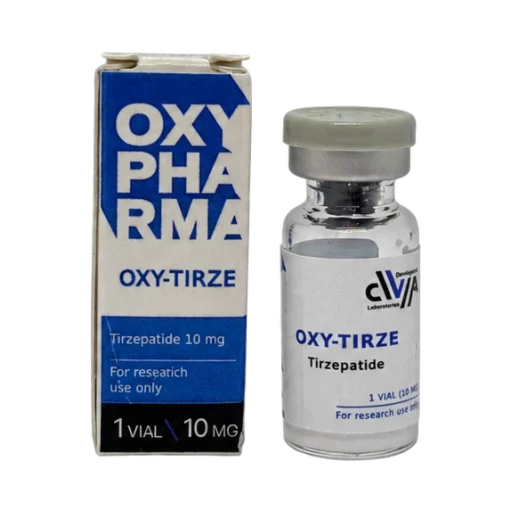
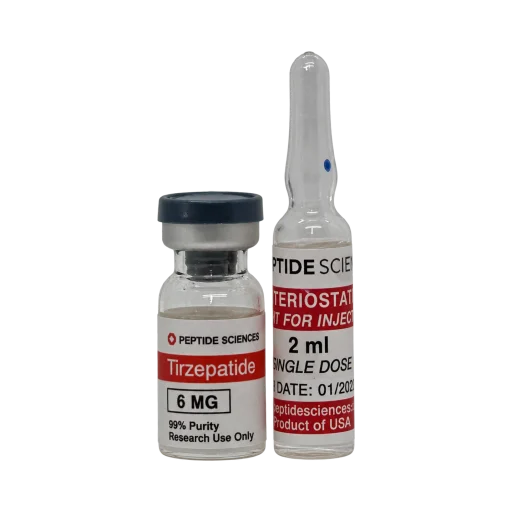
That assessment belongs to a named finished medicine and its authorised presentations. It does not establish that another container with the same ingredient name has the same identity, formulation, manufacturing controls or regulatory status. A catalogue description and a medicinal-product authorisation are different records and should remain visibly separate.
How to evaluate a product description
A careful description identifies what is known about the molecule and what is known about the specific item. Nominal content is not a clinical outcome; purity is not the same as verified content, and neither alone establishes sterility. Batch identity and the scope of a test should be understandable without relying on an attractive label.
Readers can apply a simple sequence to research claims: identify the source, locate the population, check the comparator, read the endpoint and consider what the finding does not address. This makes the difference between a useful educational page and a collection of impressive but disconnected numbers. The product selection below remains a separate catalogue view.
Frequently asked questions
Is every tirzepatide-labelled product Mounjaro?
No. Mounjaro is a specific authorised medicinal product. Sharing the active-substance name does not establish equivalence to that product or its authorised presentations.
Are GIP and GLP-1 interchangeable terms?
No. They refer to different signalling systems. Tirzepatide’s dual-receptor activity is a property of the molecule, not a claim that the two receptors behave identically.
Sources & further reading
Follow the original publications and records behind this overview. Each source answers a specific question; no single record establishes every aspect of a compound or product.
- 01 Coskun et al., Molecular Metabolism (2018): LY3298176 discovery
- 02 Willard et al., JCI Insight (2020): dual-receptor and biased agonism
- 03 Frías et al., NEJM (2021): SURPASS-2
- 04 Jastreboff et al., NEJM (2022): SURMOUNT-1
- 05 Aronne et al., JAMA (2024): SURMOUNT-4
- 06 EMA: current Mounjaro European public assessment report
Dr. Monica Tatem
Dr. Monica Tatem earned her Ph.D. in Molecular Pharmacology from a leading medical university, followed by postdoctoral research focused on anabolic pathways and cellular signaling. Her scientific work encompasses a comprehensive...
View author profile