
The essential context.
- One peptide engages three receptors; it is not a blend of three separate hormones.
- Phase 3 publications appeared in 2026, so a phase-2-only description is out of date.
- Clinical findings describe the studied material and population, not the identity of a separately supplied vial.

A three-target approach to metabolic research
Retatrutide is the development name for LY3437943, a synthetic peptide with agonist activity at GIP, GLP-1 and glucagon receptors. Its discovery programme brought together receptor experiments, animal models and early clinical investigation. These layers answer different questions: what a molecule activates, what changes in a model and what is observed in people.
Three targets do not make a molecule a simple sum of three independent effects. Receptor activity depends on the experimental system, while whole-body responses involve interacting tissues. A useful illustration shows the targets without promising that one branch produces a fixed amount of weight change or predicting an individual experience.

From three receptor targets to clinical evidence
Receptor engagement is the starting point of the research question. The map does not assign a fixed share of a clinical outcome to any one receptor.
Retatrutide
A single investigational peptide
Three receptor targets
GIP · GLP-1 · glucagon
Clinical research
Defined populations and measured endpoints
Evidence boundaries
Trial findings do not authenticate a separate product
How the evidence developed
The 2023 phase 2 obesity study randomised 338 adults and examined 48 weeks of treatment. It reported differences in body-weight change relative to placebo alongside safety monitoring. Gastrointestinal events were the most common adverse events, and heart-rate changes were also observed. This was a development study, not a comparison of every available metabolic treatment.
A separate 2023 phase 2 trial studied people with type 2 diabetes. Its analysis included glycaemic outcomes and body weight, with placebo and an active comparator. Keeping the studies separate matters: diabetes status, background therapy and the primary research question influence what a result can establish.
The phase 3 picture in 2026
TRIUMPH-1, published in 2026, randomised 2,339 adults with obesity without diabetes over 80 weeks. Its programme included weight outcomes and prespecified analyses involving knee osteoarthritis and obstructive sleep apnoea. TRIUMPH-2, also published in 2026, studied 1,152 participants with obesity and type 2 diabetes. The populations should not be treated as interchangeable.
Both papers reported improvements in their studied outcomes relative to placebo, with gastrointestinal events prominent in safety reporting. Phase 3 publication is an important update. It does not remove the need to read the endpoints, analysis strategy, missing-data handling and participant characteristics in the original studies.
Reading a result without turning it into a promise
A percentage in an abstract is usually a group estimate. It is not a guarantee for a future individual and says nothing about the identity of an unrelated commercial item. Comparisons across trials are particularly vulnerable to shortcuts when follow-up duration, eligibility criteria and statistical estimands differ.
An intention-to-treat-oriented estimate and an analysis using a hypothetical treatment strategy may address different questions. The clearest way to report a number is to keep the population, study name, time point and analysis alongside it. This page deliberately avoids a league table of headline percentages.
| Evidence layer | What it can describe | What remains separate |
|---|---|---|
| Receptor experiments | Activity at selected targets | Clinical outcomes in people |
| Randomised trial | Comparative outcomes within a protocol | An individual future response |
| Product documentation | Identity and quality of a particular item | Proof of a clinical indication |
Research status and product status
The EMA paediatric investigation-plan decision linked below is a development document. It is not a marketing-authorisation decision. This distinction can disappear when regulatory logos or document titles are quoted without their purpose. This focused source review does not establish an EU marketing authorisation for retatrutide.
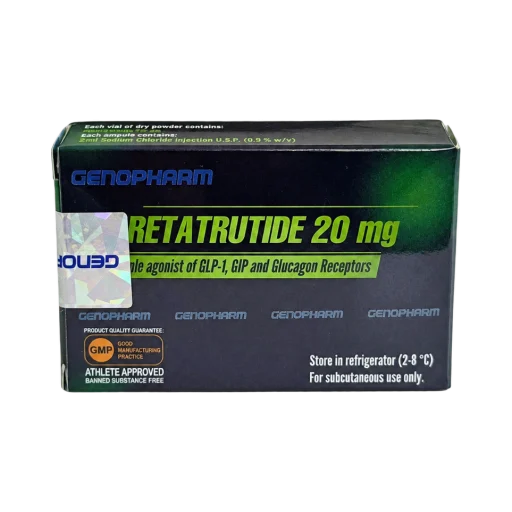
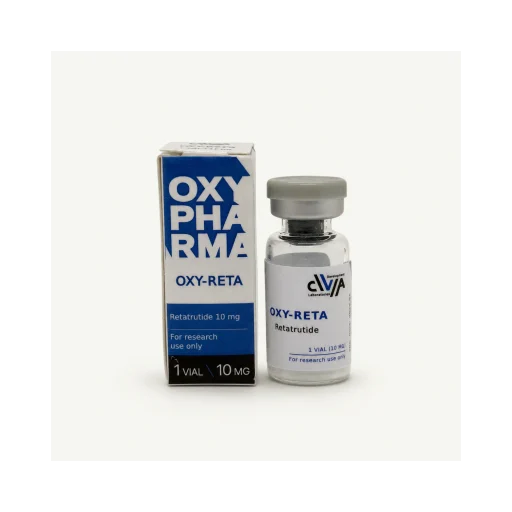
A product bearing the same compound name needs its own traceable documentation. Ingredient name, nominal milligram content and analytical purity answer different questions. None automatically demonstrates equivalence to the investigational material used in a clinical trial, or assessment of its manufacture, formulation and release.
Questions that remain useful
Relevant questions extend beyond a change on a scale. They include durability, populations not represented in a particular trial, uncommon adverse events and the relationship between measured endpoints and daily health. Each question requires suitable follow-up and study design rather than inference from receptor count.
When returning to the literature, begin with the named trial and publication date, then check whether newer analyses alter its interpretation. Registry records, conference presentations and full papers are complementary records; one should not silently substitute for another. The sources below lead directly to the publications discussed here.
Frequently asked questions
Is retatrutide the same molecule as tirzepatide?
No. Retatrutide engages GIP, GLP-1 and glucagon receptors. Tirzepatide is described as a GIP/GLP-1 receptor agonist. Shared targets do not make their molecules or studied products interchangeable.
Does a phase 3 paper establish product authorisation?
No. Clinical publication and marketing authorisation are separate processes. A paediatric investigation-plan decision is also a different type of regulatory document.
Why are there no preparation or dosing instructions?
This is an evidence and identity guide. Catalogue quantities describe labelled product content; they are not instructions for medical treatment.
Sources & further reading
Follow the original publications and records behind this overview. Each source answers a specific question; no single record establishes every aspect of a compound or product.
- 01 Coskun et al., Cell Metabolism (2022): discovery and receptor pharmacology
- 02 Jastreboff et al., NEJM (2023): phase 2 obesity trial
- 03 Jastreboff et al., NEJM (2026): TRIUMPH-1 phase 3 trial
- 04 Bellido et al., The Lancet (2026): TRIUMPH-2
- 05 Rosenstock et al., The Lancet (2023): phase 2 type 2 diabetes study
- 06 EMA (2024): retatrutide paediatric investigation-plan decision
- 07 Urva et al., The Lancet (2022): LY3437943 phase 1b study
Dr. Monica Tatem
Dr. Monica Tatem earned her Ph.D. in Molecular Pharmacology from a leading medical university, followed by postdoctoral research focused on anabolic pathways and cellular signaling. Her scientific work encompasses a comprehensive...
View author profile