
The essential context.
- Clinical fertility outcomes do not establish performance enhancement.
- Low reproductive hormones in an athlete have several possible causes.
- The 2026 anti-doping wording is sex-specific; monitoring and prohibition differ.
Why it appears in sporting discussions
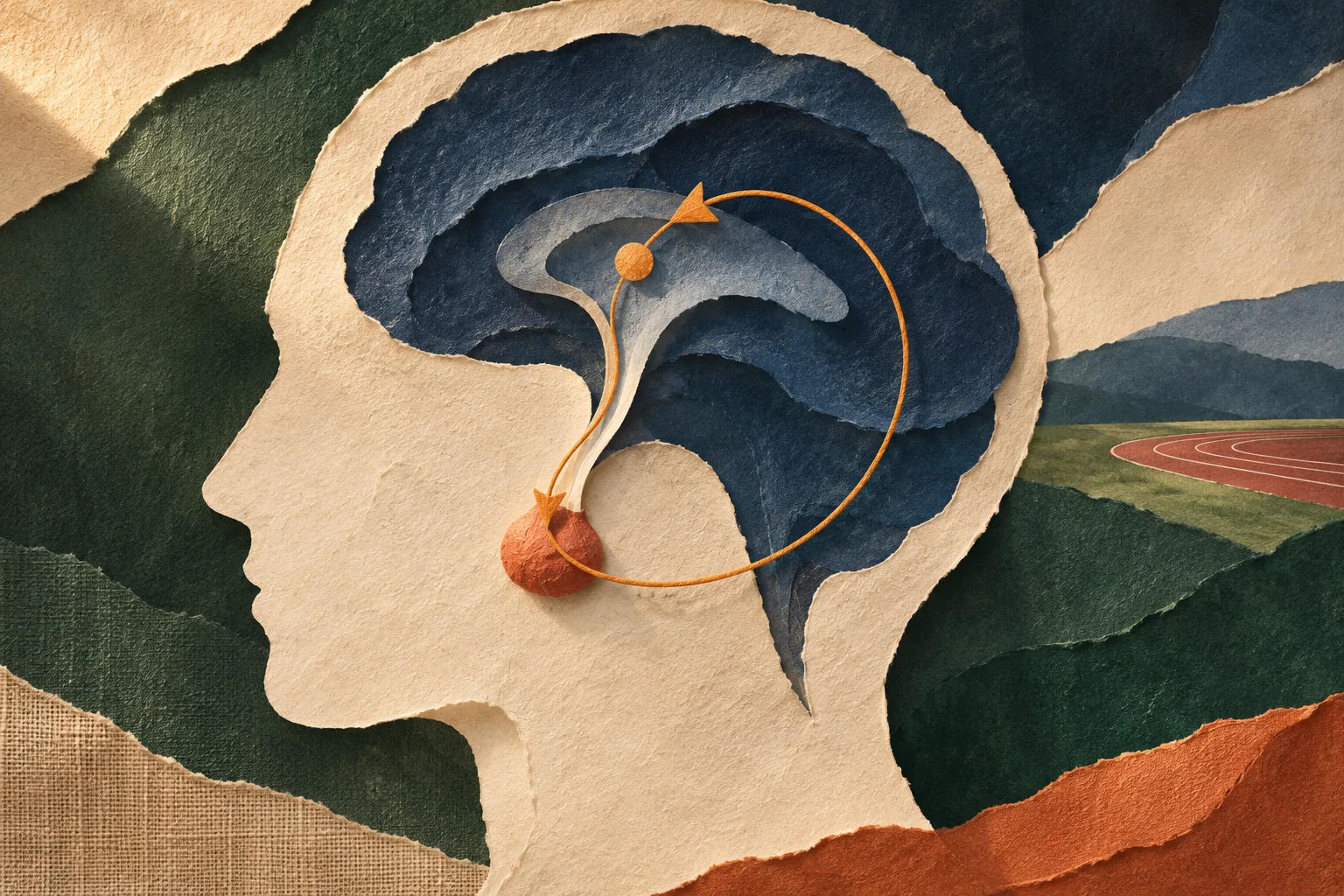
Gonadorelin is associated with the signal that links the hypothalamus to pituitary gonadotropins and reproductive function. In sport, this biology is sometimes simplified into a promise of testosterone support or recovery after hormonal suppression. That promise leaves out diagnosis, pituitary responsiveness and the clinical context.
A low hormone measurement does not identify a single cause. Fatigue, reduced libido, menstrual changes and poor training tolerance require interpretation rather than a generic reset narrative. A desirable change in one test also would not prove that fertility, health or performance has recovered.
Start with the cause, not the hormone target
Different levels of evidence answer different questions.
Complaint
Symptoms or an abnormal test
Diagnosis
Establish the endocrine context
Clinical evidence
Match the patient and endpoint
Sport
Assess health, function and applicable rules
What the male clinical study actually showed
Spratt and colleagues' 1986 Annals of Internal Medicine study followed 23 men with idiopathic hypogonadotropic hypogonadism. Specialist GnRH treatment produced reproductive endocrine responses and maturation in this defined disorder. The study concerned replacement of a deficient physiological signal.
This population is not equivalent to healthy athletes, nor to everyone with symptoms after other hormone exposure. Clinical responsiveness in one diagnosed disorder does not establish a general method of restoring a previously suppressed system. The cause of the abnormality is part of the treatment question.
The fertility cohort in women
Quaas and colleagues' 2022 Journal of Assisted Reproduction and Genetics report analysed 66 women with functional hypothalamic amenorrhea in a retrospective cohort. It documented fertility outcomes during specialised pulsatile GnRH care. This is a reproductive-medicine result, not a trial of training recovery.
Retrospective cohorts describe care without the same control over confounding as a randomised comparison. Their findings still matter, but the endpoint must remain attached: conception and reproductive function in a selected clinical population are not measurements of strength, endurance or sporting readiness.
| Claim | Evidence | Limit |
|---|---|---|
| Hormone recovery | Responses in diagnosed endocrine disease | Not a general reset for athletes |
| Fertility support | Specialist reproductive studies | Not a sports performance endpoint |
| Training resilience | A proposed extrapolation | Underlying cause still needs assessment |
An athlete's energy availability changes the question
The IOC's 2023 REDs consensus describes reproductive and other health consequences of problematic low energy availability. In an athlete, a hormonal change can therefore be part of a broader health problem rather than evidence that one signalling molecule is missing.
Trying to change the measurement does not demonstrate that the underlying energy, health or training problem has been corrected. Menstrual disturbance, persistent low libido or unexplained performance decline deserves individual clinical assessment. The aim is to understand the cause and overall health, not merely normalise one number.
Downsides and what the literature cannot quantify
The principal concern is inappropriate endocrine manipulation without the diagnosis that makes the clinical evidence relevant. The response depends on the state of the hormonal system and the form of exposure. Neither a catalogue name nor a single blood result can establish suitability.
The specialised studies cannot quantify long-term harms for healthy sport users. Product identity, actual content and contamination are additional independent uncertainties outside those studies. These limitations mean that a credible sports benefit–risk estimate cannot be borrowed directly from fertility care.
Competition rules require accurate wording
WADA 2026 prohibits gonadorelin in males under S2.
The separate 2026 Monitoring Program covers GnRH analogues in females under 18. Monitoring is not the same as prohibition. These different documents should not be collapsed into a claim that the substance is universally prohibited, universally allowed or medically suitable.
What a useful interpretation looks like
A legitimate clinical advantage exists where an identified reproductive endocrine disorder and an appropriate specialist treatment match. This does not make the same material an established recovery aid for any athlete reporting fatigue or low testosterone.
An informative sports discussion asks what disorder was diagnosed, what endpoint a study measured and whether the material is actually identified. It does not turn a fertility study into a use schedule or claim that a commercial vial reproduces specialist care.
Frequently asked questions
Is gonadorelin a proven hormonal reset for every athlete?
No. The cited clinical studies concern selected diagnosed disorders, not a general reset strategy.
Does a normalised hormone result prove recovery?
Not by itself. Reproductive function, the underlying cause, health and sporting function are separate outcomes.
Sources & further reading
Follow the original publications and records behind this overview. Each source answers a specific question; no single record establishes every aspect of a compound or product.
- 01 Spratt et al. (1986), Ann Intern Med: GnRH in male hypogonadotropic hypogonadism. PMID 3096182.
- 02 Quaas et al. (2022), J Assist Reprod Genet: 25-year FHA cohort. PMID 36378460.
- 03 Mountjoy et al. (2023), Br J Sports Med: IOC consensus on REDs.
- 04 WADA: 2026 List.
- 05 WADA: 2026 Monitoring Program.
Dr. Monica Tatem
Dr. Monica Tatem earned her Ph.D. in Molecular Pharmacology from a leading medical university, followed by postdoctoral research focused on anabolic pathways and cellular signaling. Her scientific work encompasses a comprehensive...
View author profile